

What to See at Al Azhar Park
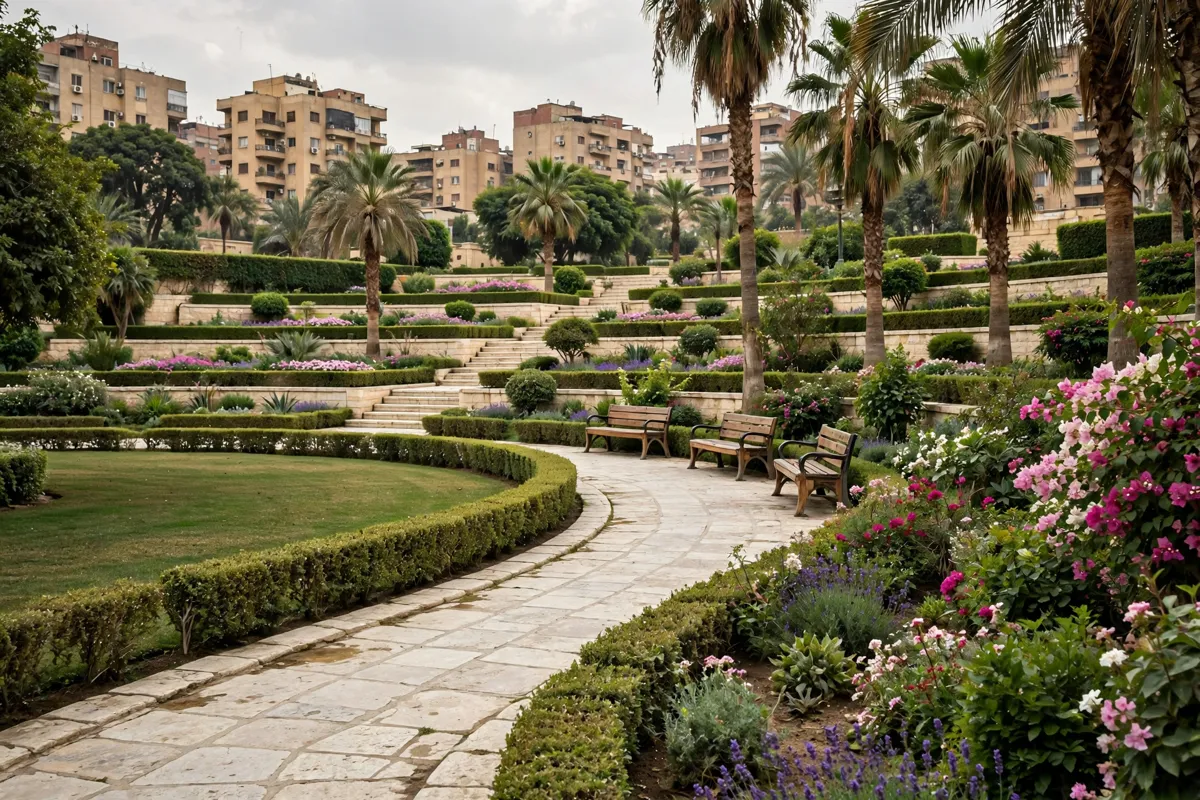
Al-Azhar Park covers 72 acres in historic Cairo. Its design takes inspiration from historic Islamic gardens, with a formal axis, water fountains, a small lake and paths oriented toward the Citadel of Cairo. The layout gives you several elements to look for as you walk: the garden’s central alignment, its water features and the changing views along the paths.
The park lists scenery, culture and history, entertainment and events among its visitor offerings. Facilities include a children’s area, a shuttle bus tour, a handicraft gallery, first aid, car parking, push cars for kids and disability facilities.
This mix means the grounds are more than a place to follow a garden path; there are also family facilities and ways to learn about local handicrafts.
The site has a longer history than its gardens suggest. The ground was once the Darassa mound, a 30-hectare accumulation of rubble between the eastern edge of Cairo’s 12th-century city walls and the City of the Dead.
The Aga Khan announced the decision to create the park in 1984, and it opened to the public in 2005. It was developed by the Aga Khan Trust for Culture as part of a wider project to support social, economic and cultural renewal in the Darb al-Ahmar district.
Views Across Historic Cairo
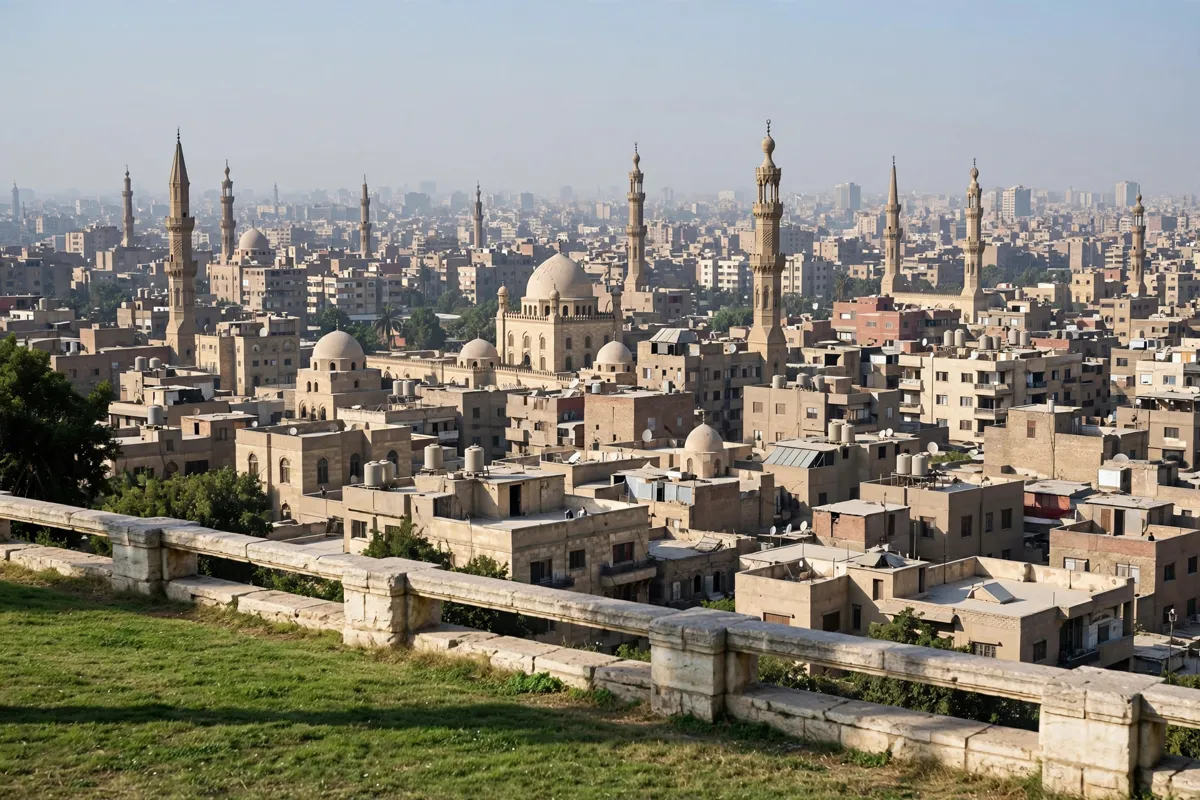
The garden paths point toward the Citadel of Cairo, tying the park’s design to the surrounding historic landscape. From within the grounds, you can take in the park’s fountains and small lake as well as the city setting around it.
The formal axis and orientation of the paths make the relationship between the landscaped grounds and historic Cairo part of the visit, rather than a separate stop.
That setting is also layered with earlier city history. Archaeological research at the site revealed remains of Cairo’s first city wall, built from mud bricks in 969 by Jawhar al-Sigilli.
The Fatimid vizier Badr al-Jamali built a new wall in 1087 and added three monumental stone gates. During Salah al-Din al-Ayyubi’s reign, the city’s defensive wall was enlarged a third time, using limestone. The remains connect the park’s modern creation to the successive walls that shaped Cairo.
Getting to the Park
Al-Azhar Park gives its address as Salah Salem Street, Cairo, Egypt; its listed location is also identified as 27R7+8V5, Salah Salem Street, El-Darb El-Ahmar, Cairo Governorate 4294010.
Attaba is the nearest metro station, and Sayeda Aisha is the nearest bus station, according to the park’s FAQ. If you plan to use rail for part of your trip, this guide to using the Cairo Metro covers getting around by metro.
Car parking is available. The park lists parking at 10 LE per hour, or 15 LE per hour on Friday. If you are planning a wider city day, you could pair the park with time in another part of Cairo; this walking guide to Downtown Cairo focuses on a different area.
Tickets, Opening Times and Visitor Rules
The listed opening hours are 9am to 10pm. Admission depends on residency status, age and day of the week:
- Egyptians and foreign residents: Adult admission is 50 LE Sunday–Thursday and 60 LE Friday–Saturday. Children aged 2–8 pay 35 LE Sunday–Thursday and 40 LE Friday–Saturday.
- Non-Egyptians: Adult admission is 150 LE Sunday–Thursday and 200 LE Friday–Saturday. Children aged 2–8 pay 100 LE Sunday–Thursday and 150 LE Friday–Saturday.
The park’s ticket page has a “Book Ticket” option. Before you go, check the official site for current hours, prices and visitor arrangements.
Some rules affect what you can bring and do on the grounds. You may not walk on plants or climb trees, bring balls or bikes, or swim in the lake. Alcoholic drinks and pets are prohibited, as are cookware and metal utensils. Weapons, fireworks and inflammable materials are also not allowed. Meetings and product advertising require referral to management.
Choosing a Time and Length of Visit
The listed hours leave room for a visit during the day or into the evening, but the facts available do not specify how long to set aside.
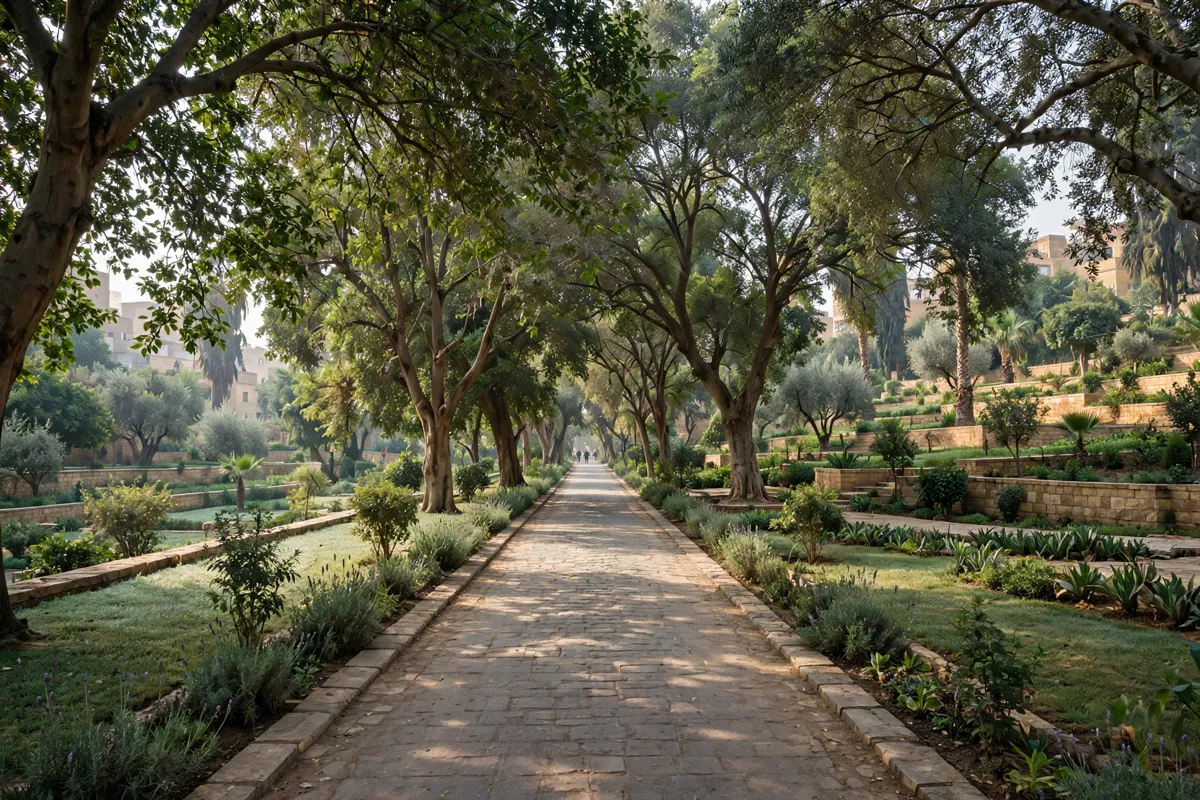
You can shape the time around the garden itself: follow the paths, pause by the small lake, and take in their orientation toward the Citadel. The shuttle bus tour, children’s area and handicraft gallery offer other ways to spend time on the grounds.
For a more focused stop, concentrate on the formal garden layout and water features. If you want to connect the park to Cairo’s past, its history and the surrounding Darb al-Ahmar district give you another thread to follow.
The facilities list also includes first aid and disability facilities, so you can check the park’s official information for details relevant to your visit.
Nearby Historic Cairo Sights
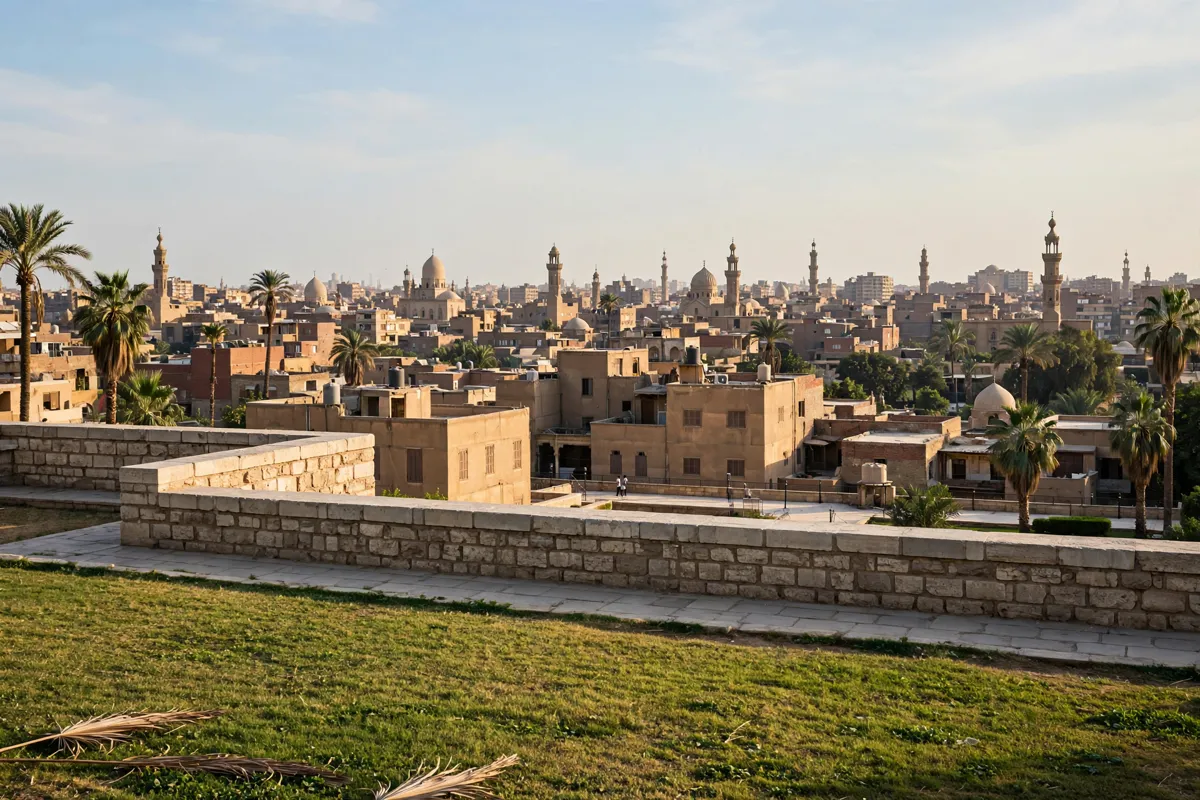
Al-Azhar Park sits within a broader historic setting in Darb al-Ahmar. The Aga Khan Foundation undertook restoration and development work on historic monuments in the area, and the park’s website describes a route connecting 16 Islamic monuments. These include mosques, schools, complexes, palaces and handicraft markets, making the district a natural companion to time in the gardens.
Examples of historic structures in the adjoining district include the 16th-century Khayrbek Mosque, the 14th-century Alin Aq Palace and the Umm Sultan Shabaan Mosque and Madrasa.
The nearby monuments and the archaeological remains associated with the city walls offer a way to extend the outing beyond the park without separating it from the history that shaped this part of Cairo.