

What Counts as Downtown Cairo
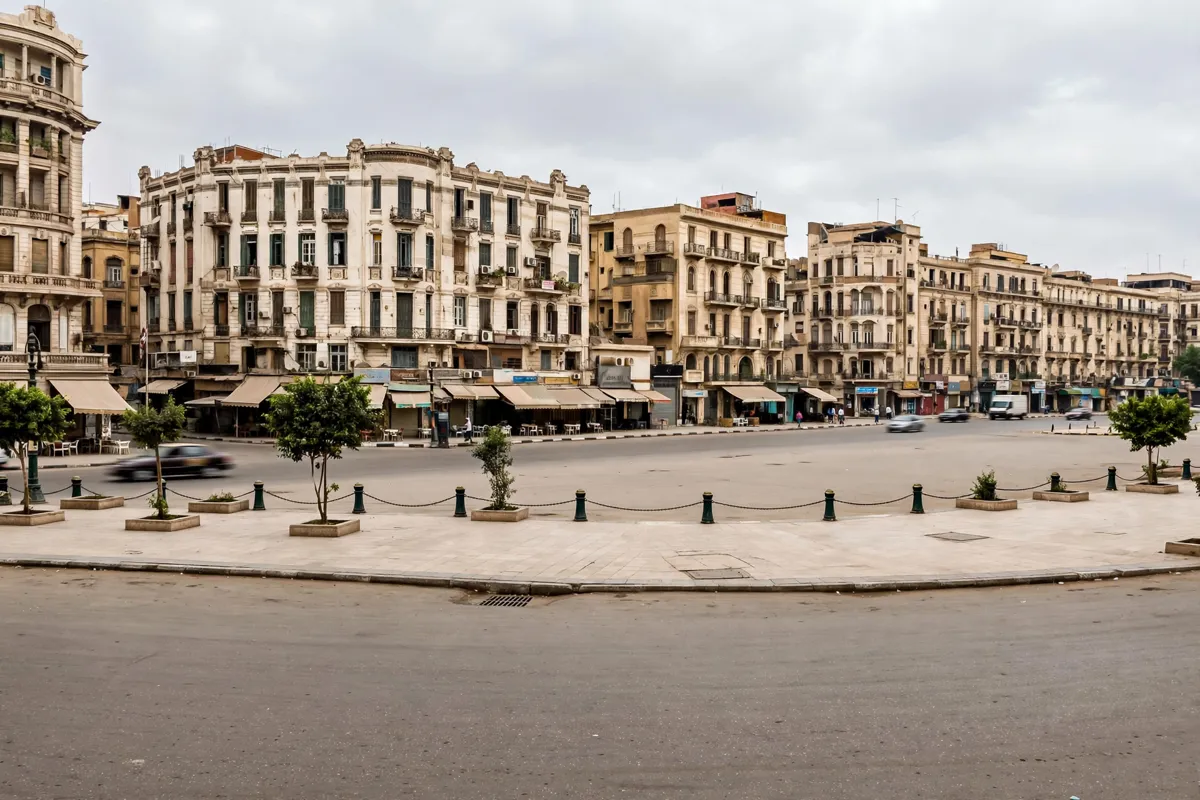
Downtown Cairo is best approached as a central cluster of squares, streets and landmarks rather than a single attraction. Tahrir Square makes a useful reference point: Cairo Governorate describes it as the heart and gateway of the city, and one of its iconic squares.
From Santana Hotel Cairo, Cairo city centre is about a 34-minute walk, so the area can work as an outing from your base.
The landmarks around Tahrir help give the district its shape. They include the Egyptian Museum, Arab League headquarters, Omar Makram Mosque, Nile Ritz-Carlton Hotel and El-Tahrir Complex building.
The four-level underground Omar Makram garage is another point of reference. Use the square as an anchor, then choose a nearby street or landmark to guide your walk rather than trying to cover the whole centre at once.
A Route Through Central Squares and Streets
Start at Tahrir Square, where several major landmarks sit close together. From there, take in Talaat Harb Square and the surrounding central streets.
This gives your Cairo walking tour a simple structure: begin at the square, continue toward the next landmark or street that interests you, and use a metro station as a convenient endpoint if you want to shorten the walk.
Sadat station is an interchange for Metro Lines 1 and 2, and it serves Tahrir. It is near the Egyptian Museum and Qasr El Nile Bridge, making it a useful transit reference for the square and its surroundings. You can pair a central-streets walk with a visit to the Egyptian Museum or continue toward the bridge.
For other things to do in downtown Cairo, use nearby destinations to shape the route rather than adding distant stops by default.
If the Cairo Tower visit is part of your plans, treat it as a separate leg of the outing. The hotel route data puts it about 37 minutes away on foot, so it is not simply another stop beside Tahrir Square.
Architecture and Street Life to Notice
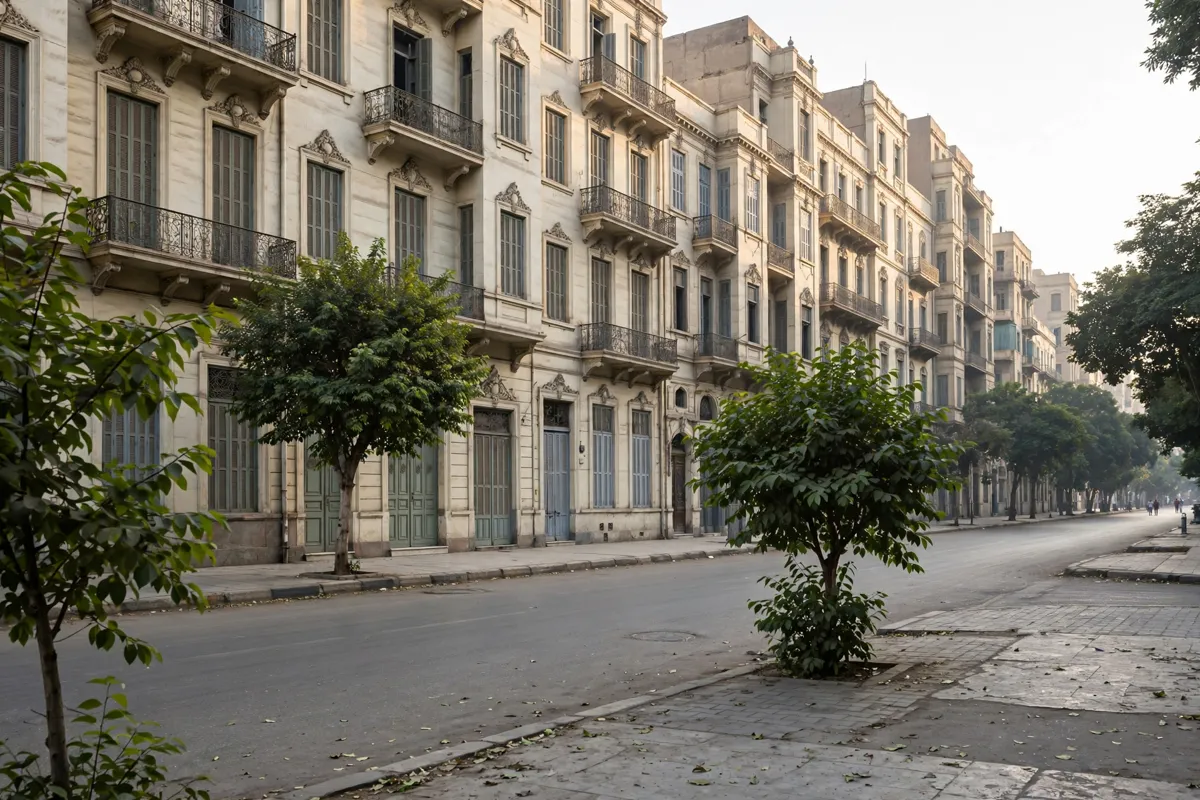
As you move between squares, look at the building fronts as well as the destinations themselves. Talaat Harb Square and the streets around it offer a way to notice how the city’s older central fabric meets its everyday movement.
Keep an eye out for differences in façades, building entrances and street-level activity as you go; these details are part of the experience of walking through downtown, not just passing between landmarks.
The district’s architecture has also been the focus of a Khedivial Cairo restoration project. The project’s stated aims include restoring heritage façades, repairing streets, improving lighting and utilities, and bringing back the visual identity of historic buildings. That context makes the streets themselves worth noticing as you walk, without assuming that every building or block has been restored.
How to Walk Safely Around Traffic
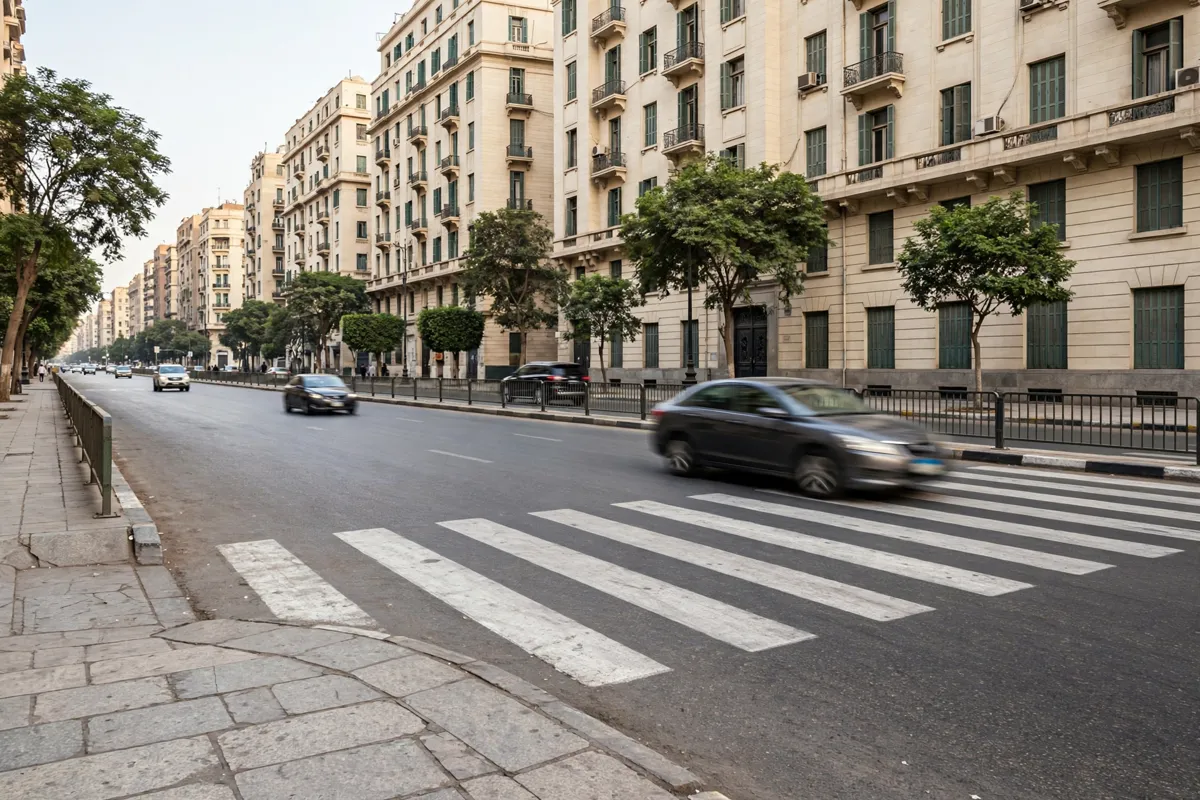
Central Cairo’s streets are active, so keep your route flexible and pay attention when crossing. Use pedestrian crossings where available, pause to assess traffic, and avoid stepping into the road while distracted. At larger junctions, it can help to break a crossing into manageable stages where the street layout allows.
Restoration and street works can affect how a route feels on the day, and access conditions may vary by location. Before setting out, check the official site before you go. For current information about the district, consult Cairo Governorate.
Reaching Downtown by Metro or Taxi
The metro gives you several ways to approach central Cairo. Sadat is an interchange between Lines 1 and 2 at Tahrir.
Gamal Abdel Nasser connects Lines 1 and 3 and is near 26th of July Street; Cairo Governorate identifies it as one of the stations closest to downtown. Ataba is identified as the closest metro station to downtown Cairo, while Mohamed Naguib is near Abdeen Palace.
Line 1 runs between Helwan and New El Marg, with Sadat and Gamal Abdel Nasser among its stations. Line 2 runs between Shubra El Kheima and El Mounib, serving Sadat, Mohamed Naguib and Ataba. For more on choosing stations and navigating the system, see this guide to using the Cairo Metro as a visitor.
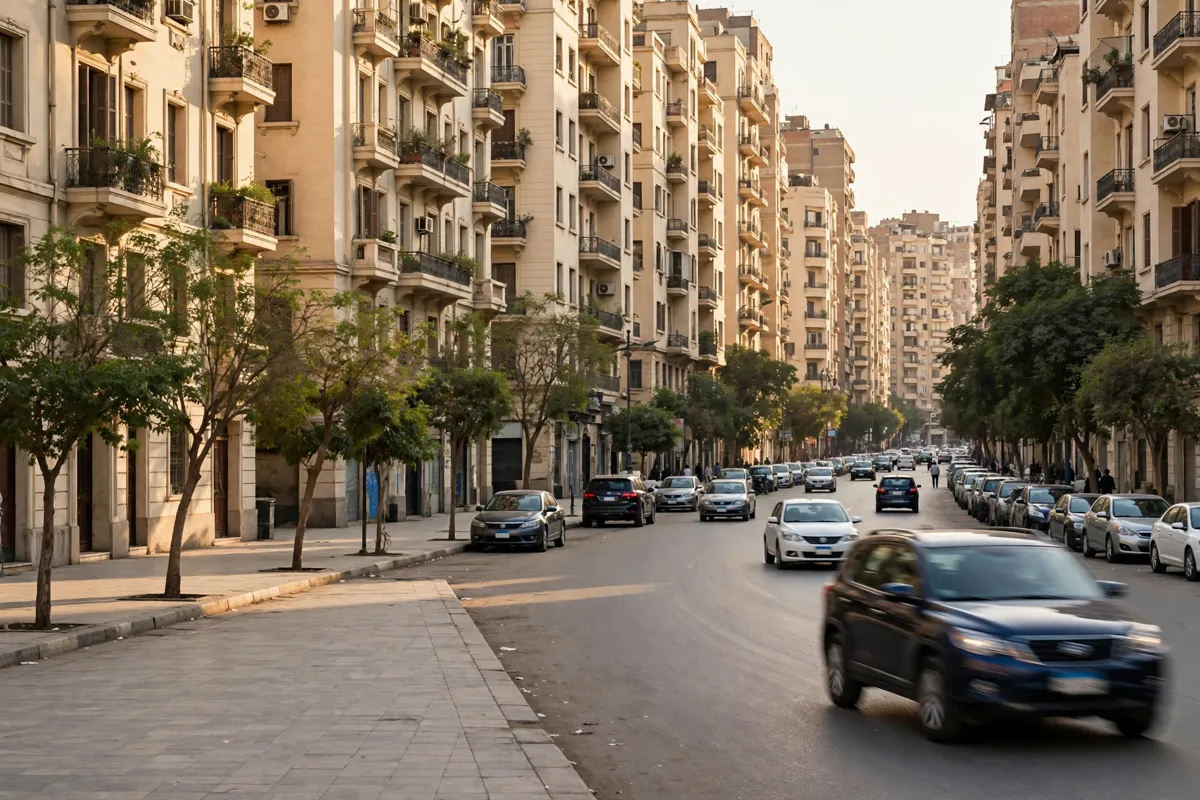
Taxi is another option if you would rather avoid a longer walk to the centre. Allow flexibility for city traffic, and settle on your destination clearly before setting off.
Allowing Time for a Downtown Visit
There is no single fixed route through downtown: the time you need depends on how many landmarks you include and whether you travel between them on foot or by metro.
For a focused outing, begin at Tahrir Square, walk toward Talaat Harb Square and choose one nearby landmark to add. If you plan to visit the Egyptian Museum, give that stop its own place in the day rather than squeezing it between crossings and street walks.
You can also make the metro part of the route: arrive at Sadat, explore the area around Tahrir, then leave from a station that suits your next destination. Keep the plan open enough to adjust your walking pace or change course if traffic or street conditions make a crossing inconvenient.